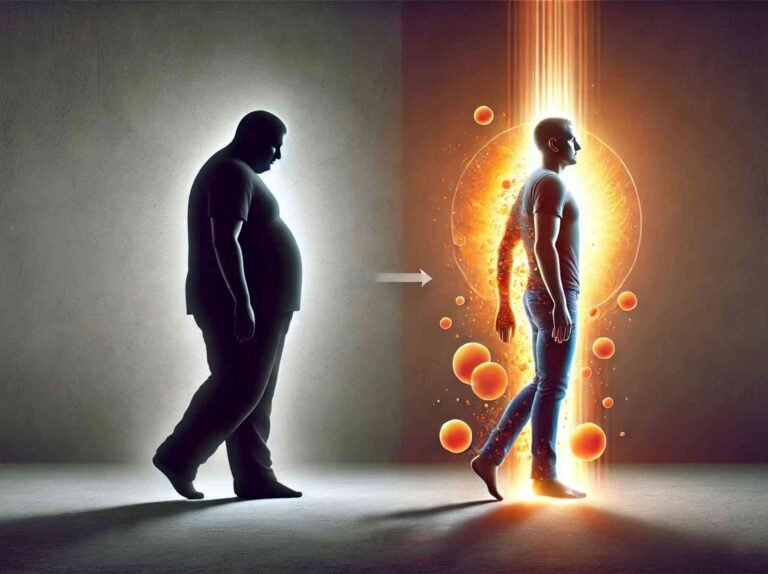
Have you ever felt like your body just doesn’t “burn” the way it used to?
You’re not alone. As we get older, things slow down—including our metabolism, the engine that keeps us going.
But here’s the good news: you’re not stuck. Even if you’re over 40, over 50, or like me—well into your 60s—you can still make changes that help your body feel stronger, work better, and move forward.
In this post, I’ll share why metabolism slows down with age and what I’ve learned (the hard way) about how to speed it back up.
🔥 What Is Metabolism?
Metabolism is how your body turns food into energy. Even while you’re sitting still—breathing, thinking, just being alive—your body is burning calories. This is called your Basal Metabolic Rate (BMR).
Think of it like your body’s engine. Some engines run fast. Some slow. But all engines can be tuned up.
⏳ Why Does It Slow Down As We Age?
As we age, our bodies change. And metabolism is no exception. But it’s not just “getting older.” Here’s what really slows things down:
1. Muscle Loss
After 40, we start to lose muscle naturally. And since muscle burns more calories than fat, less muscle means slower burn.
2. Hormone Changes
Testosterone and estrogen shift after midlife. That affects how we store fat and build muscle.
3. Less Daily Movement
We tend to sit more as we age. And less movement means fewer calories burned overall.
4. Slower Energy at the Cellular Level
Our mitochondria—tiny engines inside our cells—become less efficient over time.
The result? Even if you’re eating and moving like you used to, you may gain weight or feel tired more often.
💪 Can You Speed It Up? Yes. Absolutely.
You can’t stop time, but you can fire up your metabolism again. Here are some proven steps that work:
✅ 1. Build Muscle
Muscle burns more calories, even at rest. Strength training matters more as you get older—not less.
Try This:
Start small: bodyweight squats, wall pushups, or lifting grocery bags. Aim for 2–3 days a week.
✅ 2. Eat More Protein
Protein helps preserve muscle and boosts your calorie burn during digestion.
Try This:
Add eggs, steak, salmon, or chicken to your meals. Keep protein-rich snacks like jerky or hard-boiled eggs on hand.
✅ 3. Try Intermittent Fasting
Fasting gives your body a break and helps it use stored fat for fuel. It also supports hormone balance.
Want to learn more?
👉 [Fueling Your Body: The Science Behind Nutrition, Metabolism, and Fasting]
✅ 4. Get Better Sleep
Lack of sleep messes with your hunger hormones and slows your metabolism. Sleep is not a luxury—it’s fuel.
Try This:
Wind down early. Turn off screens 30 minutes before bed. Try for 7–8 hours nightly.
✅ 5. Lower Your Stress
Too much cortisol (your stress hormone) tells your body to hold onto fat and burn fewer calories.
Try This:
Take a walk. Breathe deeply. Say no when you need to. Your health depends on it.
✅ 6. Eat Whole Foods
Highly processed food is easy to digest—which means it burns fewer calories. Whole foods make your body work more (in a good way).
Best Metabolism Boosters:
🥚 Eggs
🐟 Salmon
🥩 Steak
🧈 Butter
🍵 Green Tea
✅ 7. Move More All Day Long
It’s not just about workouts. Every little movement counts. This is called NEAT—Non-Exercise Activity Thermogenesis (The internal process of generating heat in the body, primarily to maintain body temperature, and can also contribute to energy expenditure).
Try This:
Stand up every hour. Walk while you talk. Stretch during TV ads.
❌ Common Metabolism Myths (Don’t Fall for These)
🚫 “It’s all genetics.”
Genes matter. Habits matter more.
🚫 “Only cardio burns fat.”
Cardio helps—but muscle-building keeps metabolism high all day.
🚫 “Eat small meals all day.”
This doesn’t boost metabolism. It’s more important to eat in a way that works for your lifestyle and goals.
✅ Quick Recap: What You Can Do Today
- Build and protect your muscle
- Eat enough protein
- Try fasting (if it suits you)
- Sleep well and manage stress
- Choose whole foods and keep moving
Remember: You can reset your metabolism. Change is possible—at any age.
🎯 Final Thought
“It’s never too late to be what you might have been.” — George Eliot
A slower metabolism with age is real—but it’s not permanent.
You are not broken. Your engine just needs a tune-up.
And every small step you take—whether it’s a walk, a better breakfast, or an early night—is part of that reset.
Let’s keep going.
We’re not done yet.
See you! 😊
Warmly,
Paul